The pottery of Vallauris
, by Riviera Guests
Vallauris owes its pottery to its clay. The local earth is refractory and leaves no taste, it stands up to a gentle flame and gives back its heat slowly, which made it the material of cooking pots and pans for centuries. When Picasso walked into the Madoura workshop in 1946, the town already had more than four hundred years of the trade behind it. The workshops still line Avenue Georges-Clemenceau today, and the town holds the “Ville et Métiers d’Art” label, which France gives to towns with a living craft tradition.
Ligurian potters resettled Vallauris in 1501
The monks of Lérins, lords of Vallauris since the 11th century, signed an “acte d’habitation” in 1501 that brought about a hundred families from Liguria, mostly from Genoa and Albisola, to settle the village, and among them were potters who brought their skills along. The clay of the hillside suited kitchenware, and the town specialized in pignates and poëlons, earthenware stockpots and saucepans. The land register of 1818 lists twenty-five workshops; by the end of the 19th century there were sixty, and the railroad’s arrival at Golfe-Juan in 1862 made exporting easier. In the same period, Clément Massier was producing ceramics with metallic lusters in Golfe-Juan, and the Grassimuseum in Leipzig holds several of his pieces.
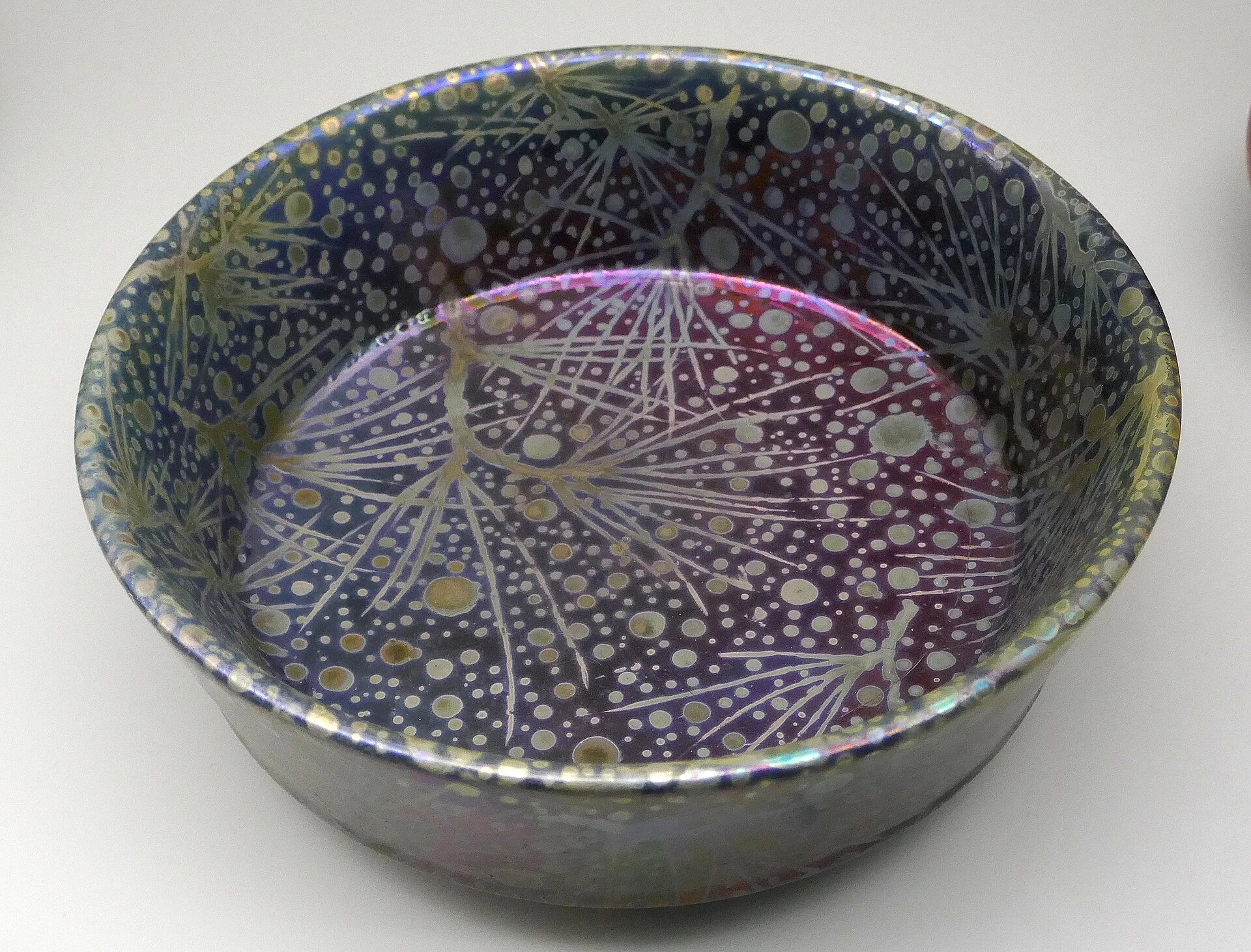
The 20th century got off to a bad start for the potters. Cast iron and aluminum competed with earthenware in the kitchen, and during the crisis of the 1930s, twenty-five of the thirty-three factories still in business closed. Those that survived turned to rustic Provençal pottery.
Picasso made between 3,500 and 4,000 pieces at Madoura
Suzanne and Georges Ramié founded the workshop in 1938 and named it after their own syllables: MAison, DOUly (Suzanne’s maiden name) and RAmié. In July 1946, Picasso, on vacation in Golfe-Juan, visited the exhibition “Poteries, Fleurs, Parfums” at the Nérolium, the town’s agricultural cooperative, then went into Madoura, where he modeled his first pieces. The following summer he found that the Ramiés had fired them, and the collaboration began. From 1947 to 1971 he made between 3,500 and 4,000 unique pieces there, and the workshop issued around 633 of his designs in limited editions. Chagall and Matisse would later work at Madoura too, which stopped production in 1997.
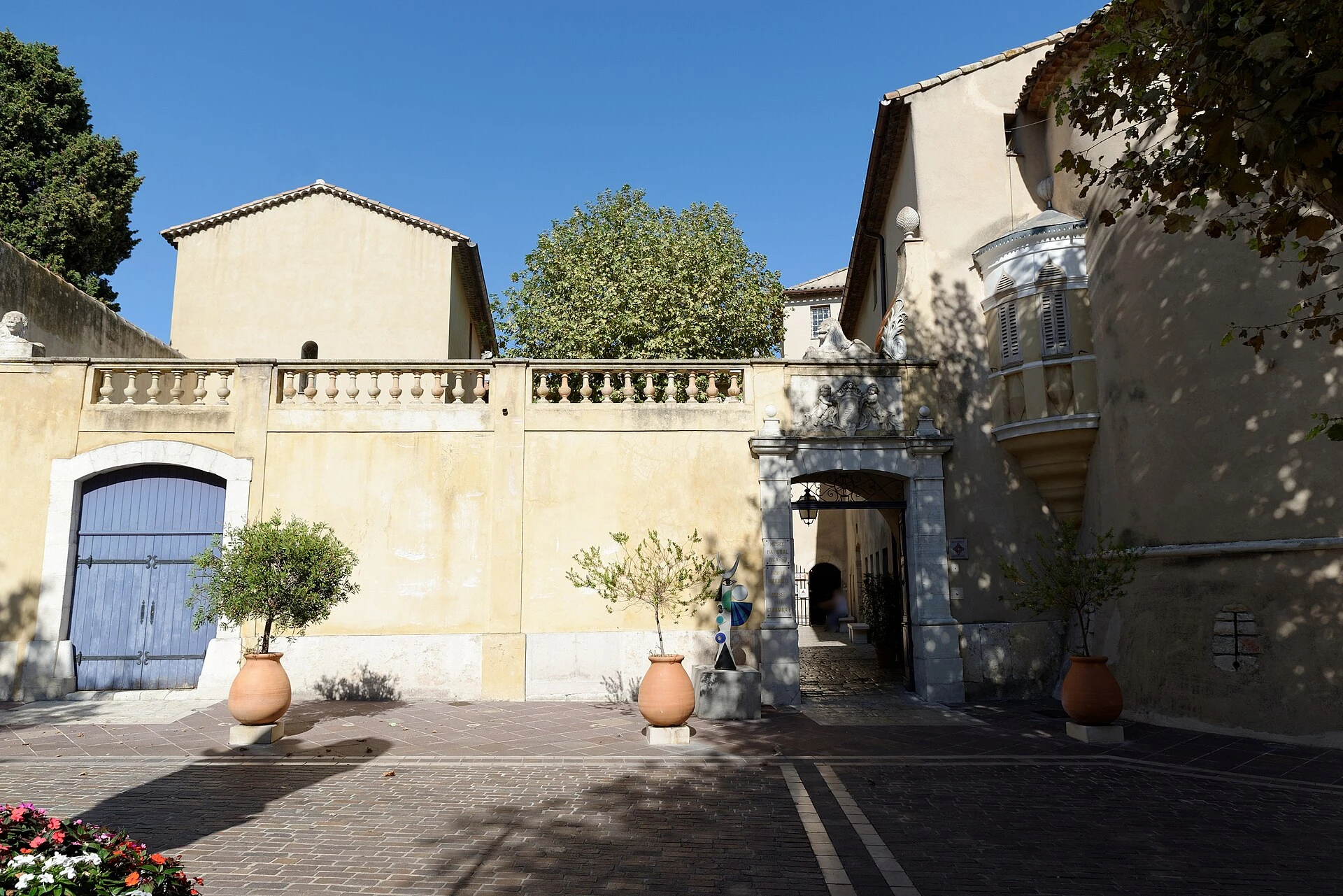
The site now belongs to the Communauté d’agglomération Sophia Antipolis, which is restoring it while keeping its original materials. It is closed for the works and has announced it will reopen in spring 2027, with exhibition rooms, teaching rooms and a garden. The Musée National Picasso and its War and Peace chapel, in the château, are the subject of another article in this journal.
The Musée Magnelli keeps the ceramics of the 20th century
Housed in the château, a former 16th-century priory, the Musée Magnelli, Musée de la Céramique, opened in 1977. Its collections trace what Vallauris has produced, from cooking pottery to postwar creations, and they keep growing with the works that win prizes at the Biennale Internationale de Céramique d’Art, founded in 1968. The same ticket gets you into the Musée National Picasso, in the same château.
Smaller and free, the Musée de la Poterie on Rue Sicard brings together the machines and tools of an old pottery factory, and it holds wheel-throwing demonstrations.
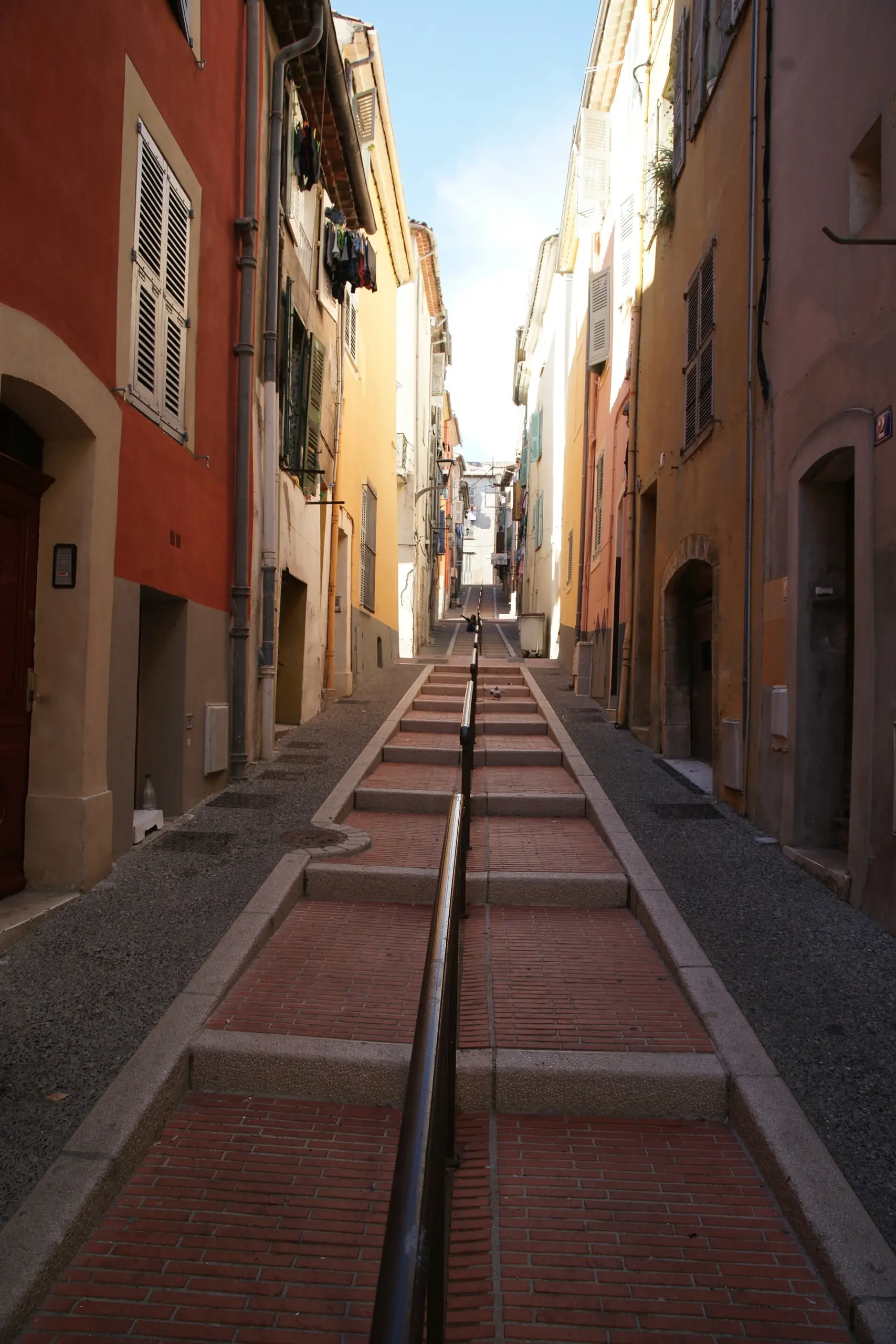
The workshops on Avenue Georges-Clemenceau are still at the wheel
Most of the town’s workshop-boutiques are on Avenue Georges-Clemenceau. Lou Pignatier, a family business founded in 1977 that holds the Entreprise du Patrimoine Vivant (Living Heritage Company) label, runs two stores there, at numbers 43 and 52. At number 39, Les Petites Porcelaines make porcelain tableware on site. Julien Capron, grandson of the ceramist Roger Capron, welcomes visitors by appointment on Rue Clément-Bel, in his studio of one-off pieces in wood and ceramic.
On the first Friday of every month, the artists and craftspeople of the avenue open their doors in the evening for demonstrations and openings. In the old town, ceramic doves decorated by Vallauris artists are set along the walls.
A throwing lesson takes an hour and a half
Several workshops let visitors sit at the wheel. At Elementerre, on Boulevard du Docteur-Jacques-Ugo, Salvatore Oliveri, who has been throwing pots for more than forty years, teaches techniques up to rope-throwing for large jars; a ninety-minute session costs €40, and children from age 8 can take part on Wednesday mornings. The École d’Art Céramique de Vallauris, set in a former factory on Avenue du Stade, runs courses of a few days during the school vacations. The tourist office lists nine other classes for beginners.
Practical information
Musée Magnelli and Musée National Picasso, château, Place de la Libération. From September 16 to June 30, 10 am to 12:15 pm and 2 pm to 5 pm; from July 1 to September 15, 10 am to 12:30 pm and 2 pm to 6 pm. Closed on Tuesdays, January 1, May 1, November 1 and 11, and December 25. Combined ticket €6, free for under-18s and on the first Sunday of the month.
Madoura, Rue Suzanne-et-Georges-Ramié: closed for works, reopening announced for spring 2027.
Throwing lessons: Elementerre, 42 Boulevard du Docteur-Jacques-Ugo, €40 per session, +33 6 52 68 61 66. École d’Art Céramique, Espace Grandjean, Avenue du Stade, +33 4 93 64 77 41.
Musée de la Poterie, 21 Rue Sicard: free admission, opening hours vary with the season, +33 4 93 64 66 51.
Pottery festival (Fête de la Poterie): every summer in August, in the town center; the 2026 edition took place on August 9.
Getting there: A8 highway, exit 44 (Antibes), then the RD 435; parking at the Espace Loisirs and the Hôtel de Ville, near the château. Golfe-Juan train station (SNCF), then Envibus bus 8. Tourist office at 4 Avenue Georges-Clemenceau, +33 4 93 63 18 38.
Opening hours and prices checked in October 2026; confirm them before you go.
Where to stay: two of the label’s guesthouses welcome guests on the heights of Vallauris
Three minutes by car from the château, the Domaine des Encourdoules looks straight down to the sea and Cap d’Antibes from more than a hectare of grounds on a protected, listed site. Agathe Freymann fitted out her rooms in an 18th-century sheepfold with century-old beams and walls built from stone quarried on the estate, next to an orchard and vines grown on terraces (restanques).
Five minutes from the château, in the Riquebonne neighborhood, the Villa Le Port d’Attache looks out over the Mediterranean between pine woods and fruit trees. Gillian and Daniel, who spent years traveling the world, named each room after a wind, and a Provençal fountain can be heard from the terraces.

Domaine des Encourdoules
Vallauris
Breathtaking view of Cap d'Antibes, over one hectare of parkland, guest rooms and an exceptional suite in the heart of a protected and listed site.

Villa Le Port d'Attache
Vallauris
Sheltered by the pines, panoramic view and dolce vita in Vallauris.
More places to discover on the French Riviera