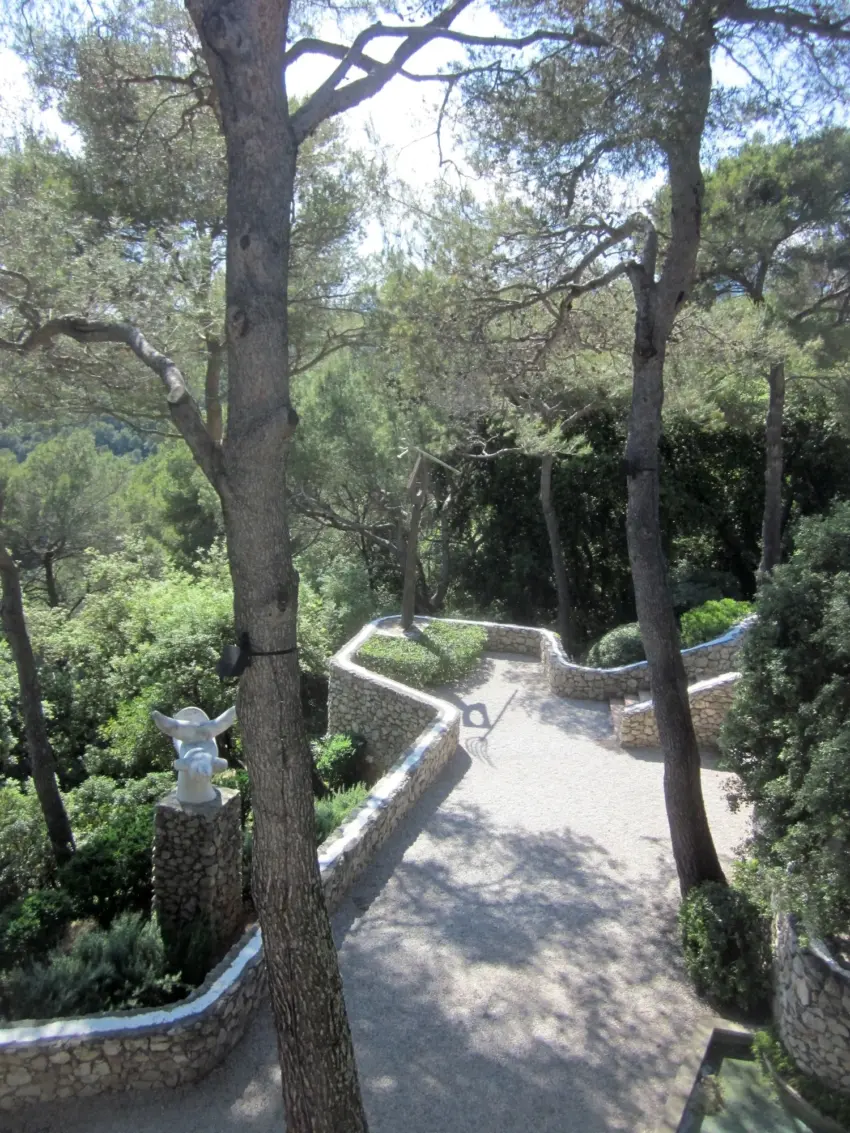
The old village of Mougins
, by Riviera Guests
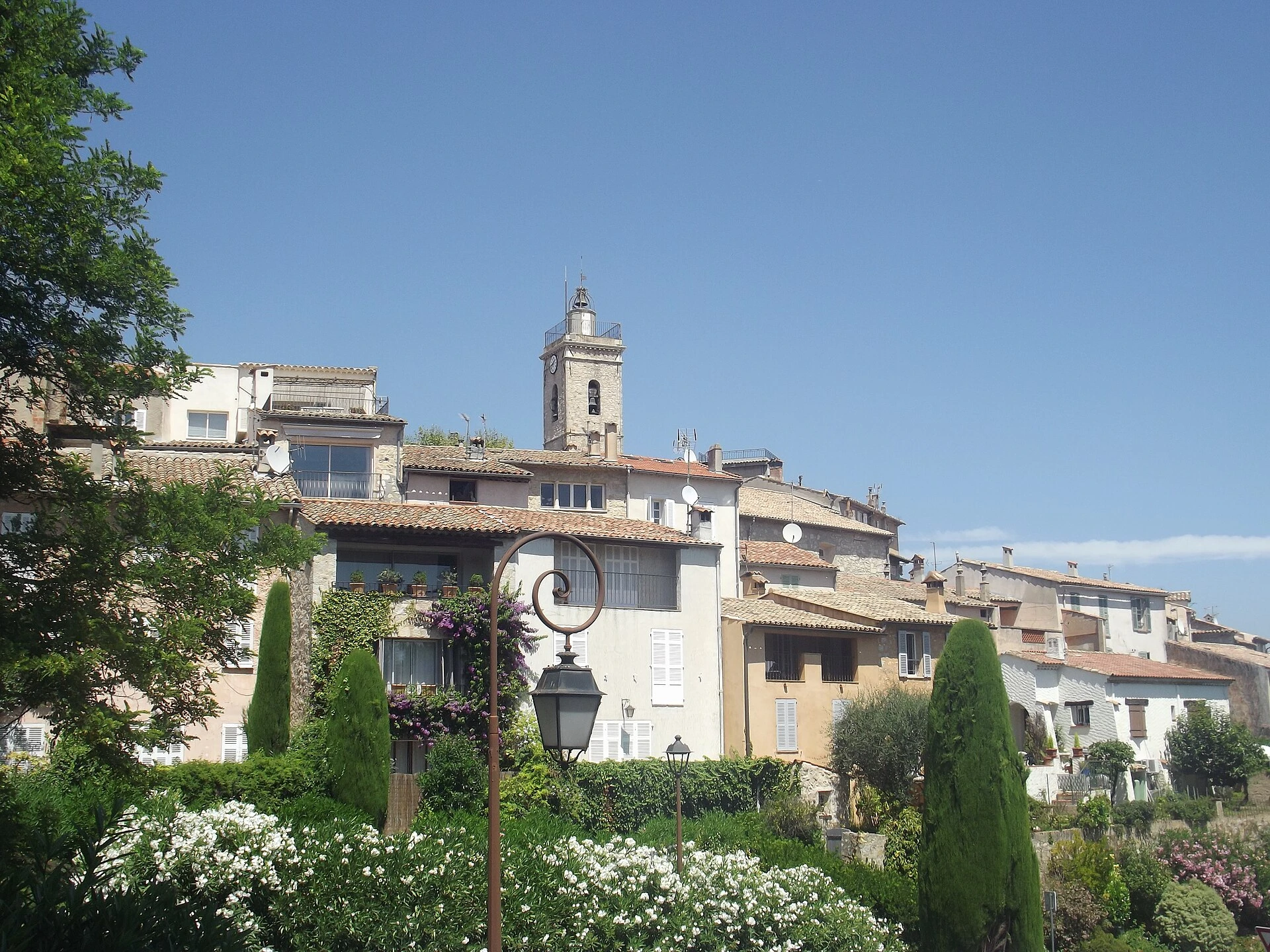
The old village of Mougins sits on top of a 260-meter hill, and from up there the view runs all the way down to the Bay of Cannes and the Lérins Islands. Its lanes wind around the hill in a spiral, following the plan of a small town that the monks of Lérins held from 1056 until the eve of the French Revolution. The village is closed to cars, so you leave yours at the foot of the hill and wander slowly from one gallery to the next, in the town where Picasso spent the last twelve years of his life, at the Mas Notre-Dame-de-Vie.
The village has kept its medieval spiral layout
Mougins began in the first century BC on the route of the Via Aurelia, the Roman road that linked Rome to Arles, and was fortified in the Middle Ages. Of its ramparts and four gates, only the Porte Sarrazine survives, near the church square. The church there, Saint-Jacques-le-Majeur, was begun in the 11th century and enlarged in the 18th and 19th; it still holds gilded wooden statues and a 15th-century crucifix. Since 1954 the town hall has occupied the Saint-Bernardin chapel, built in 1618, and weddings are still held there.
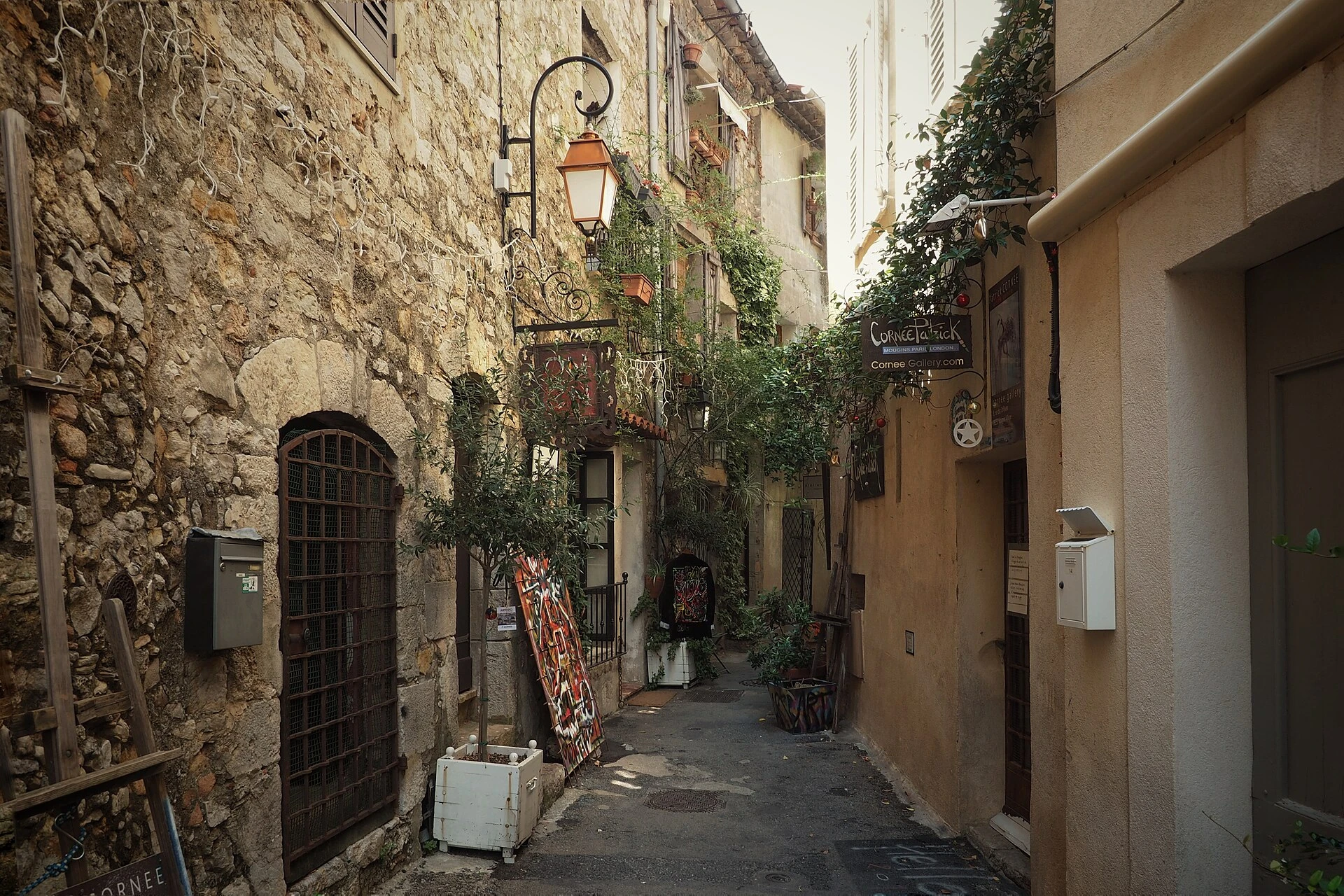
The streets carry traces of trades you would not expect here. On Rue des Orfèvres, Bernardin Bareste struck coins for the Abbey of Lérins in 1666. At the entrance to the village, the 1894 public wash house now hosts art exhibitions, free of charge.
Picasso spent the last twelve years of his life in Mougins
Picasso knew Mougins long before he settled there. In the summer of 1936 he stayed with Dora Maar at the Hôtel Vaste Horizon in the village, where the photographer Lee Miller took pictures of him. In 1961 he bought the Mas Notre-Dame-de-Vie and lived there with Jacqueline Roque until his death on April 8, 1973. The house is private property and is not open to visitors.
The chapel it is named after, on the other hand, is open to the public. Rebuilt in 1655 at the end of an avenue of cypresses and listed as a historic monument since 1927, it served until 1730 as a “sanctuaire à répit,” a shrine where families from all over the region brought their stillborn babies, hoping for a sign of life that would allow them to be baptized.
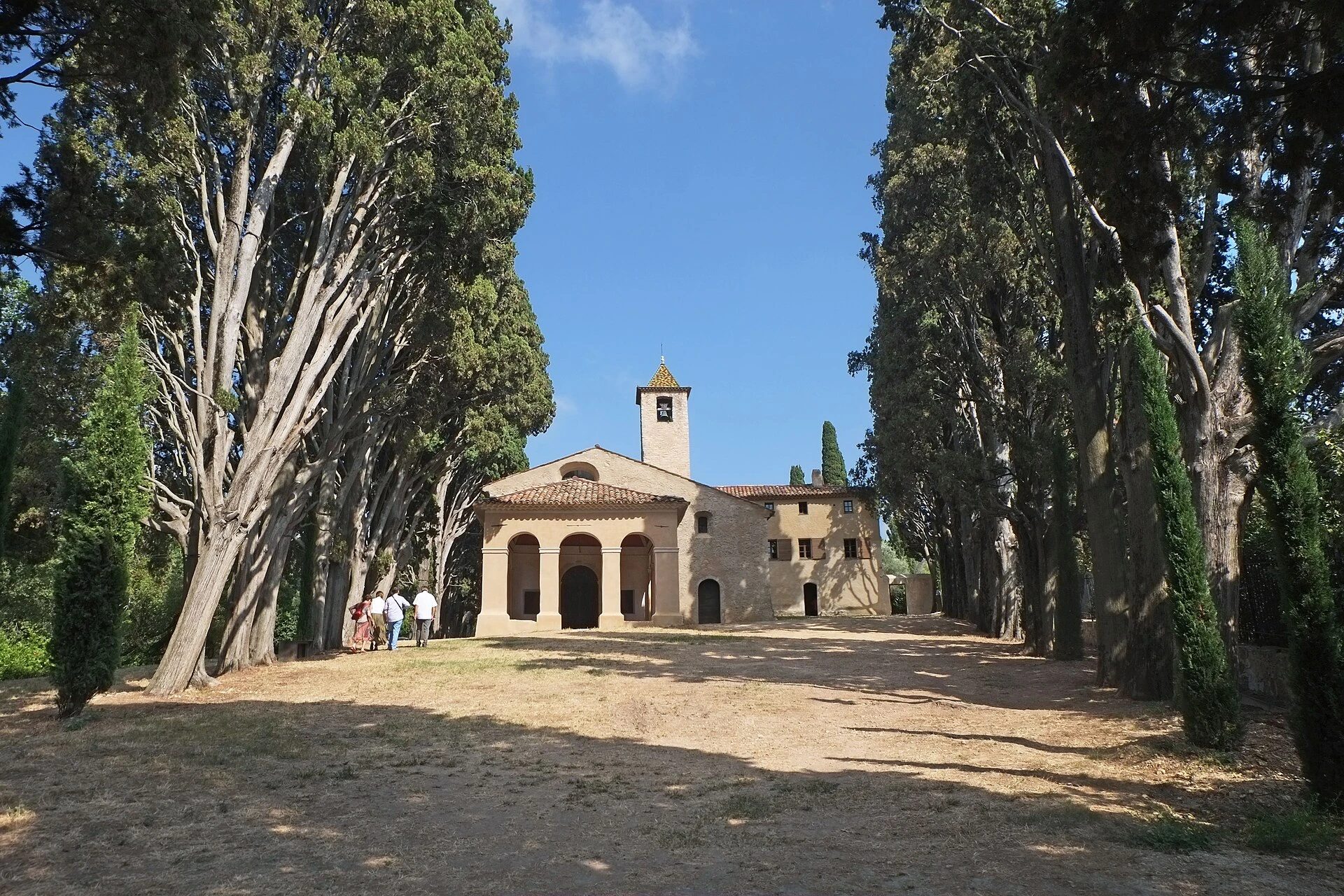
FAMM replaced the Museum of Classical Art in 2024
The Mougins Museum of Classical Art, which set antiquities alongside modern works, closed in August 2023. In the same building on Rue du Commandeur, its founder, the collector Christian Levett, opened FAMM on June 21, 2024. The museum is devoted to women artists and shows about a hundred works by more than ninety of them. On Rue de l’Église, the Centre de la Photographie de Mougins opened in 2021 in the former photography museum the town had dedicated to the photographer André Villers; it puts on three major exhibitions a year. The Centre d’Art, on Place du Commandant-Lamy, is showing sculptures by Beth Carter until November 1, 2026.
Chef Roger Vergé turned Mougins into a destination for food lovers
In 1969, chef Roger Vergé and his wife Denise opened the Moulin de Mougins in a former olive oil mill on Avenue Notre-Dame-de-Vie. His “cuisine of the sun” earned him three Michelin stars between 1970 and 1974, and his kitchen trained Alain Ducasse, Daniel Boulud and David Bouley. In 1980 Ducasse took his first job as head chef at L’Amandier, Vergé’s other restaurant in the village. The Moulin, now called the Patio du Moulin de Mougins, serves Mediterranean food beneath a mosaic by the Belgian artist Folon. The Étoiles de Mougins food festival, which this journal has written about, is not taking place in 2026 and has not yet announced its next edition.
Practical information
Parking: the village is pedestrian-only, and all of its parking lots are free, including Hubac 1, 2 and 3 at the foot of the village. From the A8 highway, take exit 42. By bus from Cannes, take Zou! line 660 or the Palm Express B to Val de Mougins, then line 26 or 28 to the Mougins Village stop, Monday through Saturday. You can also walk up the Chemin de la Calade in about twelve minutes.
FAMM, 32 rue du Commandeur. Open daily, 10 am to 6 pm from October 1 to June 20, and 10 am to 7 pm from June 21 to September 30; closed December 25. Admission €16, free for children under 10.
Centre de la Photographie, 43 rue de l’Église. October to March, 1 pm to 6 pm, closed Monday and Tuesday; April to September, 11 am to 7 pm, closed Tuesday. Admission €6, free for under-18s and on the first Sunday of the month.
Centre d’Art, Place du Commandant-Lamy. 1 pm to 6 pm in October and November, during the current exhibition. Admission €4, or €8 for a combined ticket with the Centre de la Photographie.
Notre-Dame-de-Vie chapel: open on Sundays from October to April, on weekends in May, June and September, and every day in July and August. Free admission.
Opening hours and prices as of October 2026; check before you go.
Where to stay: Villa Soha and the Mas de Mougins welcome guests a few minutes from the village
Built in 2021 on the heights of Mougins, Villa Soha looks across at the old village from its 2,600 m² Mediterranean garden, planted with fruit trees, oaks and olive trees. Muriel and Christophe have set up three guest rooms there, each opening onto a terrace, and Muriel serves breakfast by the saltwater pool or under the pergola. The village parking lot is a four-minute drive away.
The Mas de Mougins, a family home turned guesthouse, has five rooms, a Balinese-style pool edged with a travertine deck, and oak trees more than a hundred years old. Delphine and Jean-Philippe welcome guests five minutes from the old village and less than fifteen minutes from Cannes.
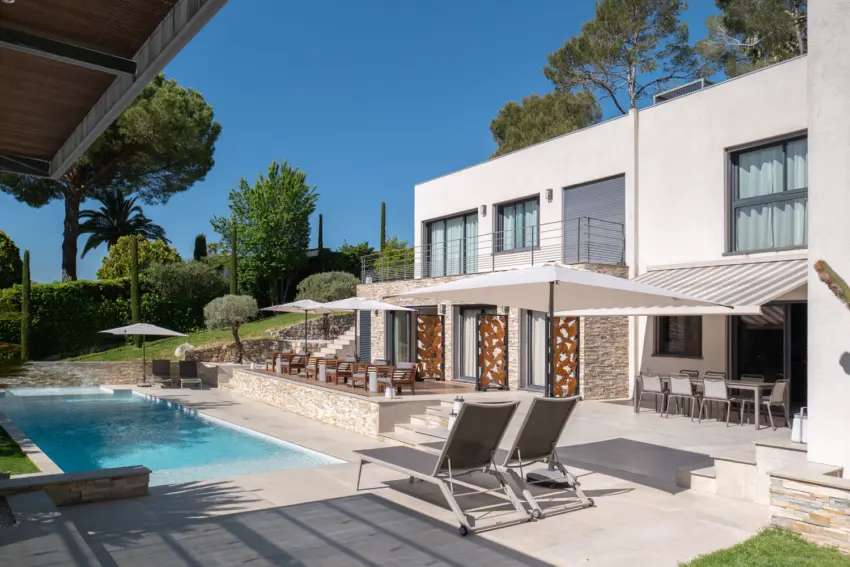
Villa Soha
Mougins
Light, calm and design on the heights of Mougins: a contemporary three-bedroom guesthouse with a Mediterranean garden and saltwater pool.

Le Mas de Mougins
Mougins
A Provençal residence with century-old oak trees and the scent of jasmine, featuring a central Balinese-style pool, a travertine beach, and tastefully decorated rooms.
More places to discover on the French Riviera