Saint-Honorat Island
, by Riviera Guests
A fifteen-minute boat ride from the port of Cannes, Saint-Honorat Island has belonged since 1869 to a community of Cistercian monks, who also tend its vineyard. The island is only 1.5 km long and 400 m wide, yet monastic life still sets the pace of the day: according to the abbey, twenty-one monks gather in the church seven times a day and welcome the visitors who come over from the mainland every day. Smaller and quieter than its neighbor, Sainte-Marguerite, the island is explored on foot, from the abbey to the chapels and on to the fortified tower that looks out over the sea.
The first monastic rule in Gaul was written at Lérins
In the early fifth century, Honoratus settled on the island, then called Lerina, with a few companions. The monastery grew so quickly that by 427 John Cassian was already describing it as an “immense monastery”. The Rule of the Four Fathers, written at Lérins, is the first written monastic rule in Gaul, and tradition holds that Saint Patrick spent time there. The abbey was secularized in 1788 and the island auctioned off in 1791; monastic life only resumed in 1869, with the arrival of Cistercians from Sénanque Abbey. Today’s abbey dates from that nineteenth-century revival and stands around a medieval cloister of the twelfth and thirteenth centuries. The monks’ living quarters remain closed to the public, but the church is always open.
The tower-monastery reopened in 2026 after six years of work
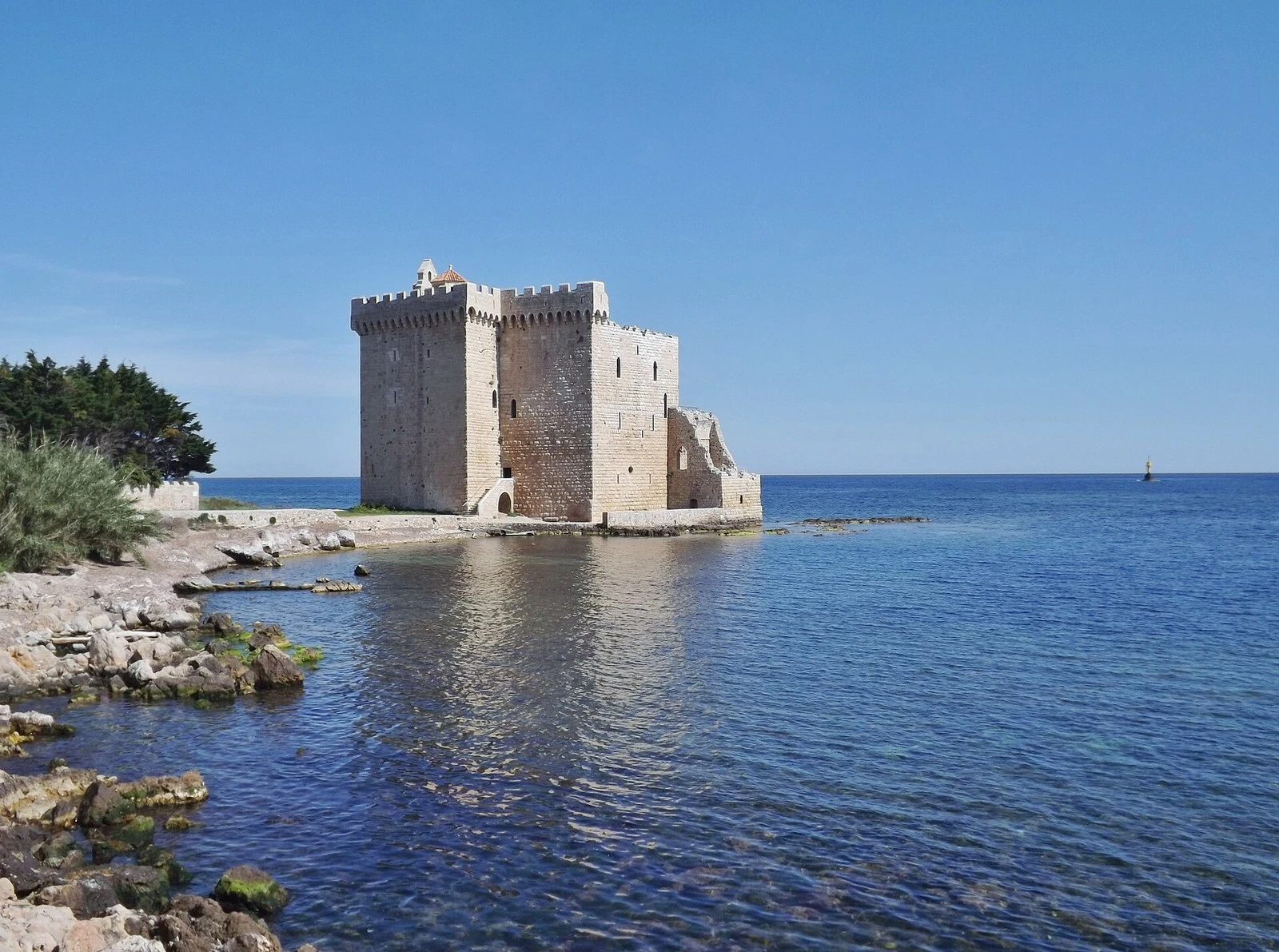
At the end of the eleventh century, the monks built a tower at the water’s edge as a refuge from attacks coming from the sea. Enlarged over several centuries, it became a complete vertical monastery in the fifteenth century, with a cloister, refectory, church and cells, where monks and soldiers lived side by side until 1788. Listed among France’s very first historic monuments in 1840, on Prosper Mérimée‘s list, it was restored in a project that began in July 2020 and was inaugurated on June 22, 2026. The cloister’s lost third level has been rebuilt from the archives, eleven contemporary stained-glass windows have been installed, and the tower now houses a tapestry by the artist Vera Molnar, her last work. The French Ministry of Culture has announced guided tours; ask the abbey for times.
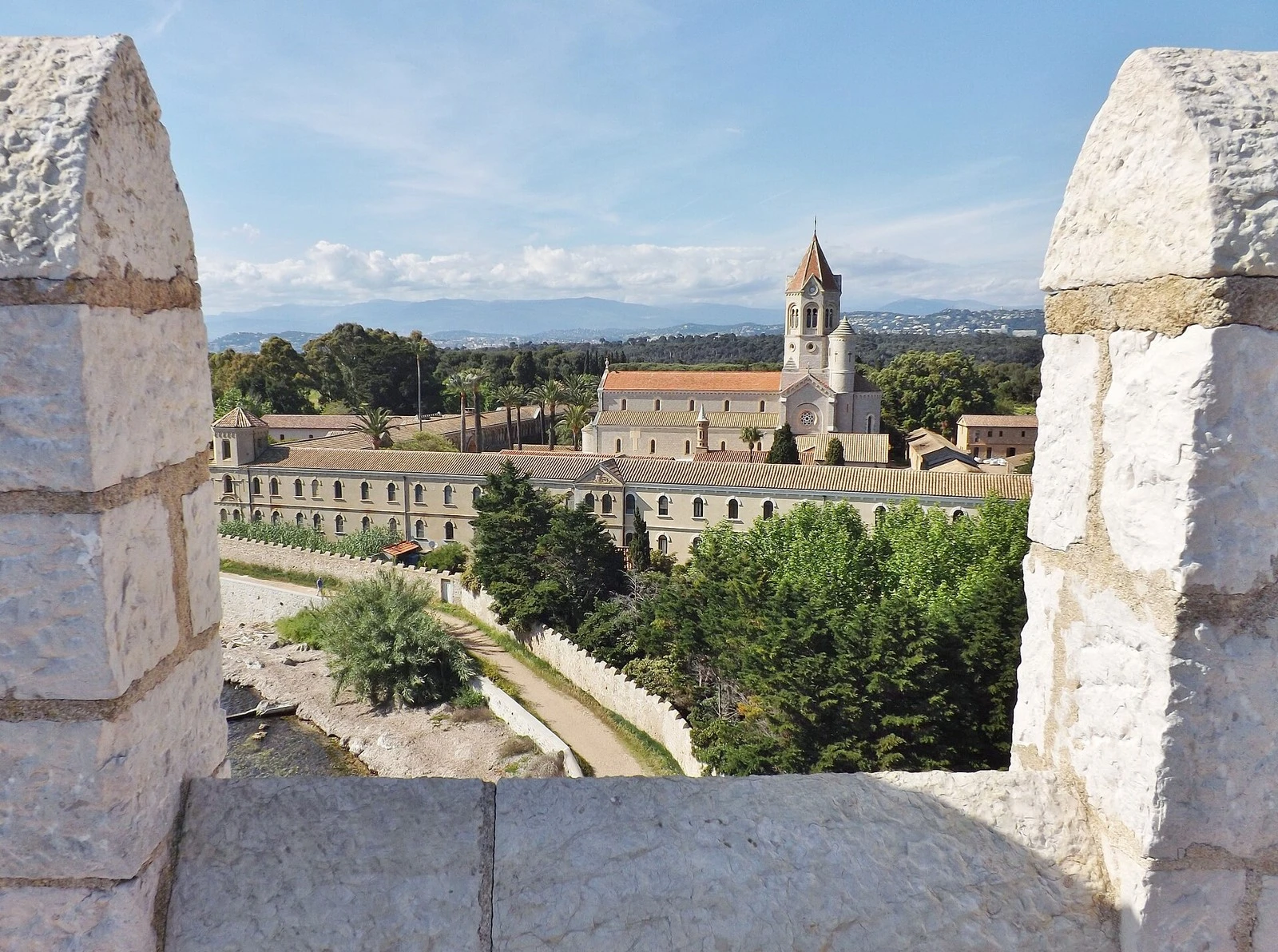
The restoration is part of a wider ambition: the island is preparing a bid for UNESCO World Heritage status, with the application due to be filed in 2027 and a decision expected in 2028.
Chapels and cannonball ovens mark the walk around the island
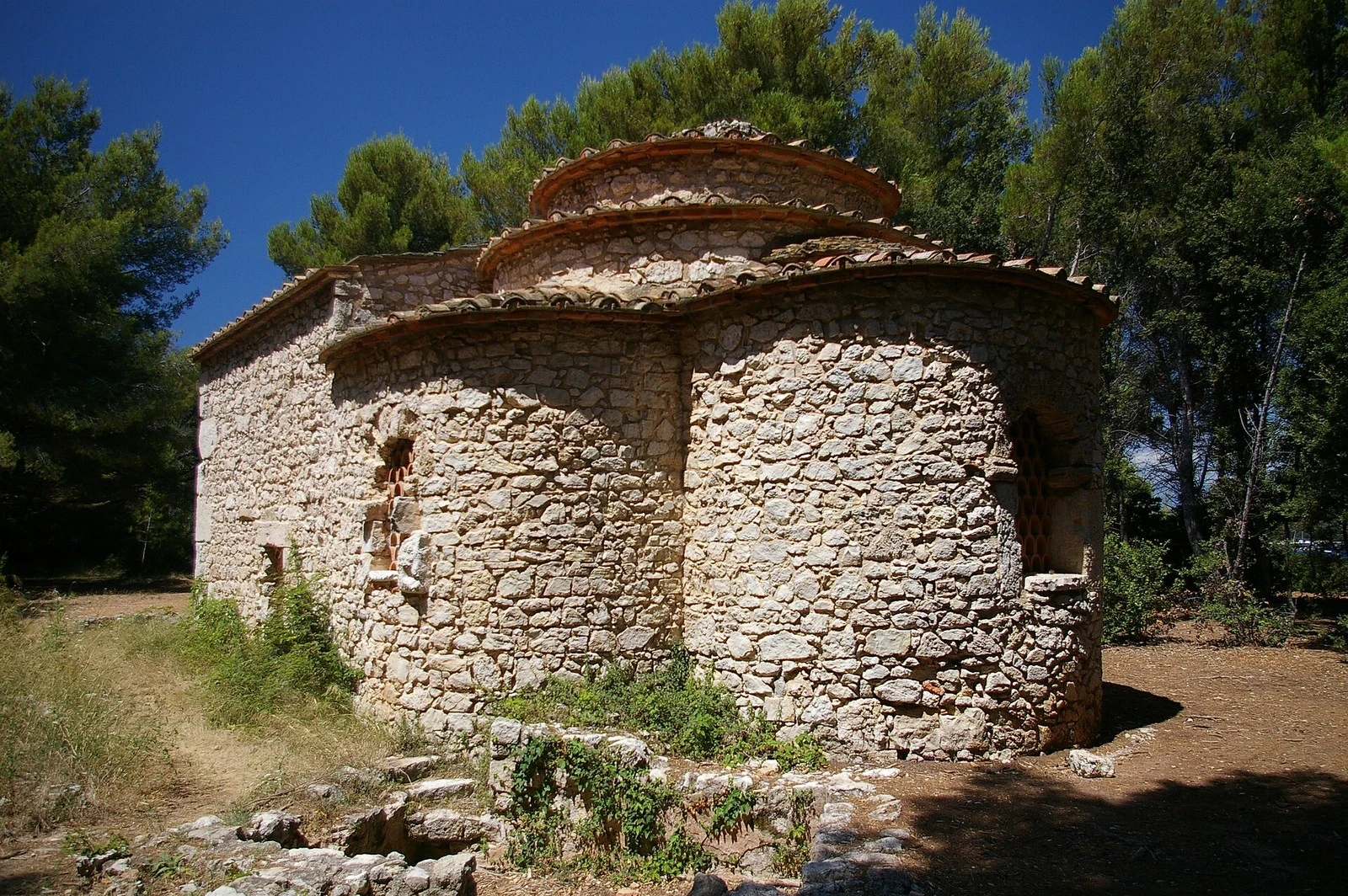
At the eastern tip, the Trinity Chapel, dated by scholars either to the Carolingian period or to the eleventh century, opens three apses beneath an elliptical dome. The Saint-Sauveur Chapel, an octagon about eight meters across, stands on the remains of a fifth- and sixth-century oratory uncovered by excavations. At both ends of the island stand ovens once used to heat cannonballs red-hot so they would set enemy ships on fire: those on the Lérins Islands were completed in February 1794 at Bonaparte‘s instigation, and only about ten are thought to survive in France.
The monks produce about 40,000 bottles a year
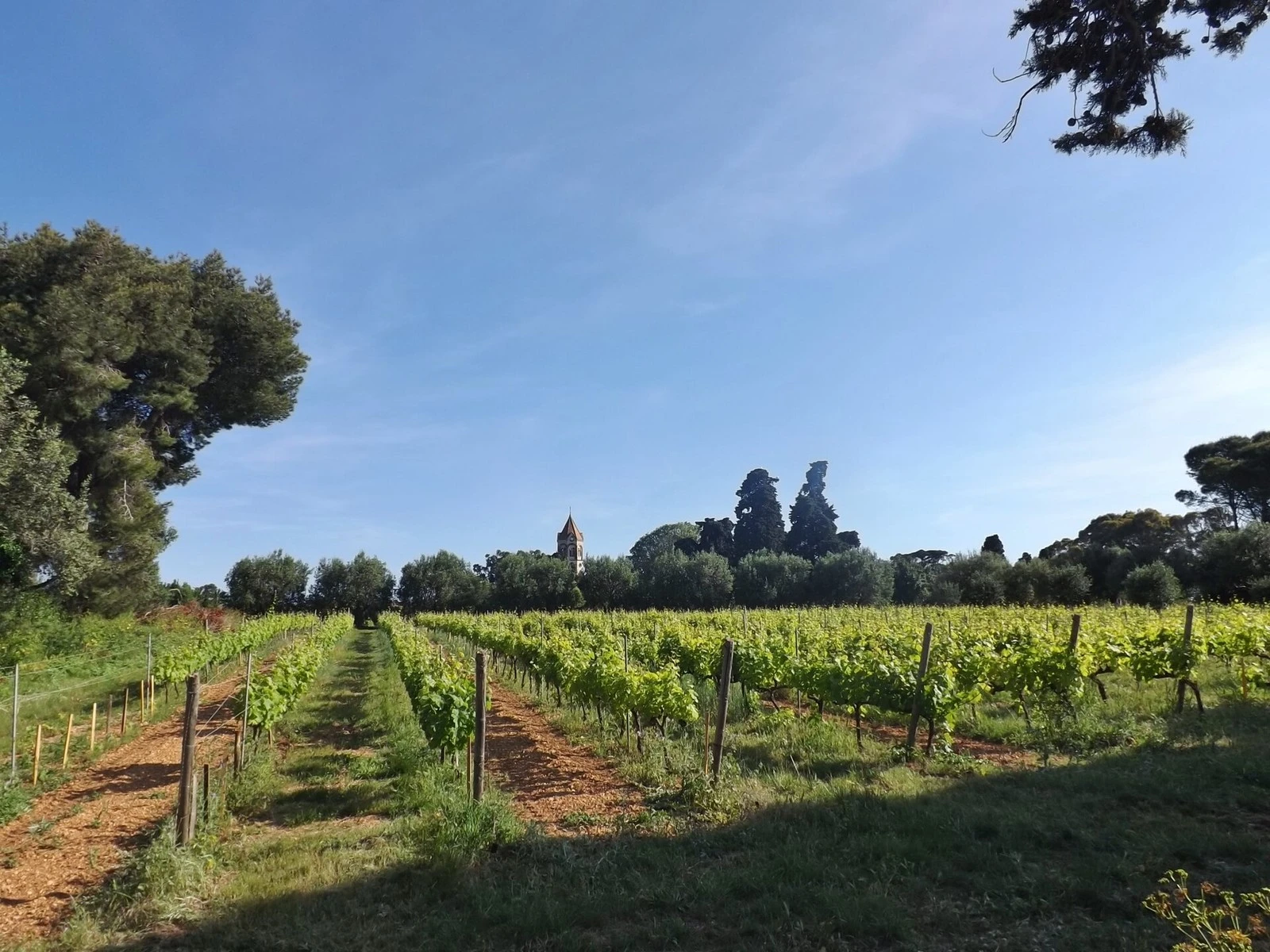
The vineyard, 8.5 hectares according to the abbey, grows Syrah, Mourvèdre and Pinot Noir for the reds, and Chardonnay, Clairette and Viognier for the whites, on vines between twenty-five and eighty years old. The brothers prune, disbud and harvest by hand, and every stage, from winemaking to bottling, takes place on the island. The classic wines are each named after a saint, from Saint-Pierre, a Clairette, to Saint-Salonius, a Pinot Noir; the more recent Le Silence range is the exception. The estate’s first rosé, Le Silence Rosé, vintage 2025, is sold only at the island’s wine shop, for €21.50. Part of the price comes from island life: barrels, vine stakes, fuel and bottles all arrive by boat.
The monks also make liqueurs, including the green Lérina, made from forty-four plants, some of them grown on the island. The wine shop, near La Tonnelle restaurant, reopened in April 2026 and is open from 11:30 am to 5 pm. On the first Friday of each month, weather permitting, a tasting is held among the vines.
The island asks visitors to follow a few rules
Saint-Honorat is private property and a place of prayer. Modest dress is expected, and nudism, smoking, fires and drones are all forbidden. The abbey has removed every trash can on the island, so visitors take their waste back to the mainland. Swimming is still possible in the coves along the rocky shore, where water shoes come in handy.
Practical information
Getting there: Planaria is the only company serving the island, every day of the year. Boats leave from Quai Maxime Laubeuf in Cannes, and the crossing takes fifteen to twenty minutes. A round trip costs €19.50 for adults, €12 for ages 4 to 15, and is free under 4. From October 1 to November 1, 2026, boats leave Cannes every hour from 9 am to 5 pm, except at 1 pm. The return time is booked when you buy your ticket, sold at the booth on the quay, as online sales were suspended in fall 2026. Information: +33 4 92 98 71 38.
Parking: the Laubeuf car park is closed for works; the Pantiero car park is a five-minute walk from the boarding point. Plan to arrive half an hour before departure.
On the island: the grounds and the church are free and open to all. La Tonnelle restaurant is open daily from 12 pm to 2:30 pm until October 31, 2026, by reservation at +33 4 92 99 54 08; in winter there is nowhere to eat on the island. The abbey shop closes in November. There is no direct boat to Sainte-Marguerite: you have to go back through Cannes.
Opening times and prices checked in October 2026; please confirm before you go.
Where to stay: Villa du Roc Fleuri welcomes guests a twenty-minute walk from the boats
Less than a kilometer from the Palais des Festivals, Villa du Roc Fleuri has five rooms and suites, partly furnished by Fanny and Max themselves: the lamps come from Fanny’s workshop, and family furniture has been given a new life. In the evening, the table d’hôtes serves dishes from Nice and Provence under the glass roof, and the house grows its own vegetables. The boarding point for Saint-Honorat is about twenty minutes away on foot, so you can catch the first morning boat without looking for a parking space.

More places to discover on the French Riviera