Sainte-Marguerite Island
, , by Riviera Guests
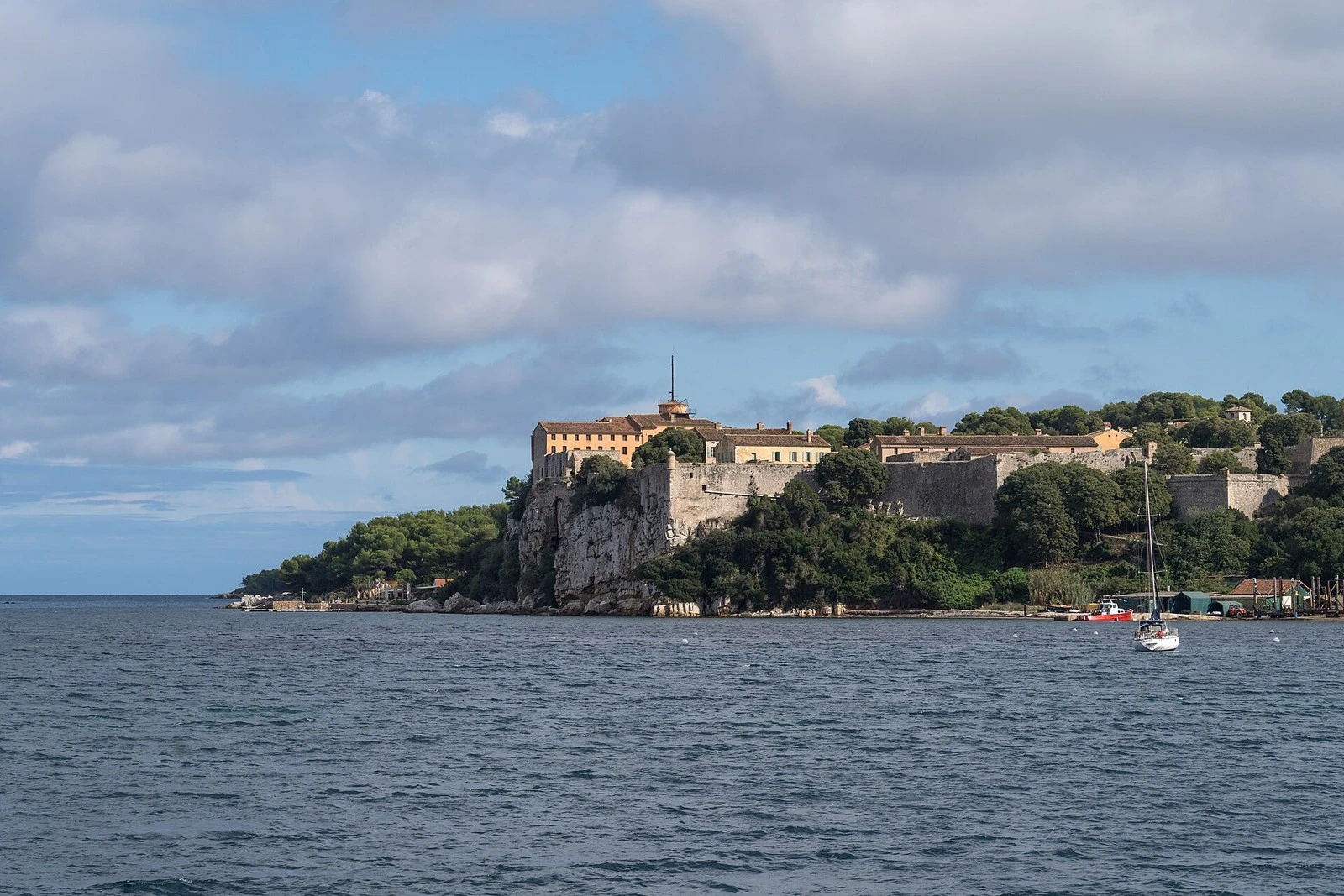
A fifteen-minute boat ride from the Old Port of Cannes, Sainte-Marguerite Island covers about 170 hectares, almost entirely wooded with Aleppo pines and holm oaks, and not a single car drives on it. The largest of the Lérins Islands owes its fame to one of the most famous prisoners in history, who spent eleven years locked up in the Royal Fort that overlooks the sea, facing the town. The island is explored on foot, from the fort to the Batéguier pond and on to the coves of the south shore, where six sculpted faces rest a few meters under water.
The Man in the Iron Mask spent eleven years in the Royal Fort’s prison
Built in the 1620s and held by the Spanish from 1635 to 1637, the fort became a state prison at the end of the 17th century, where the king had people he considered dangerous locked up without trial. The most famous of them arrived in 1687 with his jailer, Bénigne Dauvergne de Saint-Mars, and stayed until 1698, before ending his days in the Bastille in 1703. No one was to see his face, and his identity remains unknown: several dozen theories have been put forward, from a twin brother of Louis XIV, now considered far-fetched, to a certain Eustache Dauger, the focus of current research.
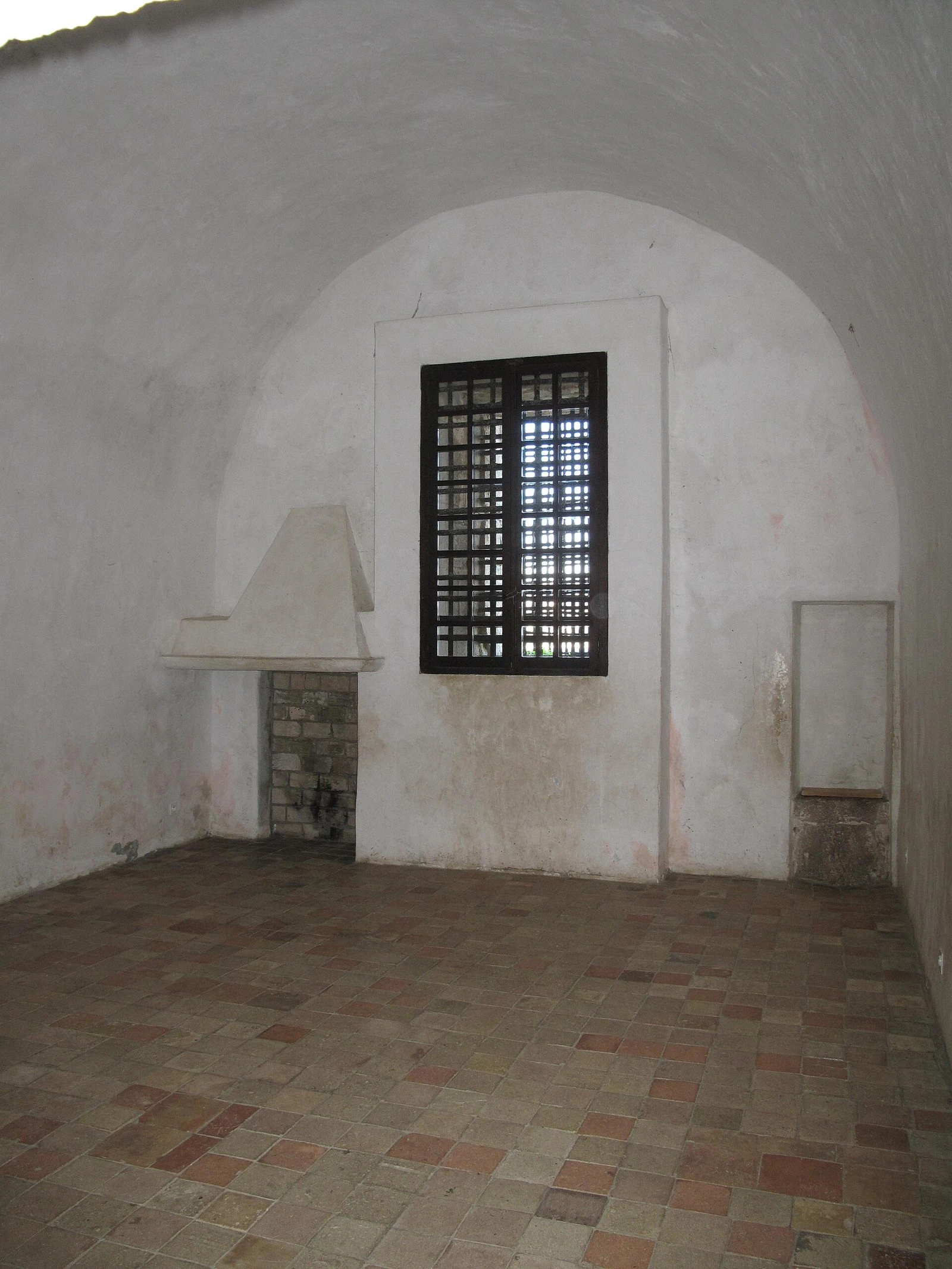
His vaulted cell can still be visited. He left it only once a day, to attend mass said at an altar set up in the corridor, and his prison was considered comfortable, with tapestries on the walls and a fire kept burning in the fireplace. Since 1950, other cells have housed a memorial to six Protestant pastors imprisoned after the revocation of the Edict of Nantes.
The Musée de la Mer became the Museum of the Iron Mask and the Royal Fort
Opened in 1978 to display the finds from local excavations, the Musée de la Mer (Museum of the Sea) has since been renamed the Musée du Masque de Fer et du Fort Royal, without giving up its archaeology. Its Roman cisterns display the cargoes of two shipwrecks found off the island: a Roman ship that sank around 15 to 10 BC near the islet of La Tradelière, loaded with wine from the Greek islands of Chios and Kos, dates and thousands of hazelnuts, and a 10th-century Saracen vessel whose cargo included a lamp filler shaped like a dromedary. From November 28, 2026 to May 30, 2027, the exhibition “Les oubliés du Fort Royal” tells the story of the foreign civilians interned on the island during World War I.
A 152-hectare state forest covers almost the entire island
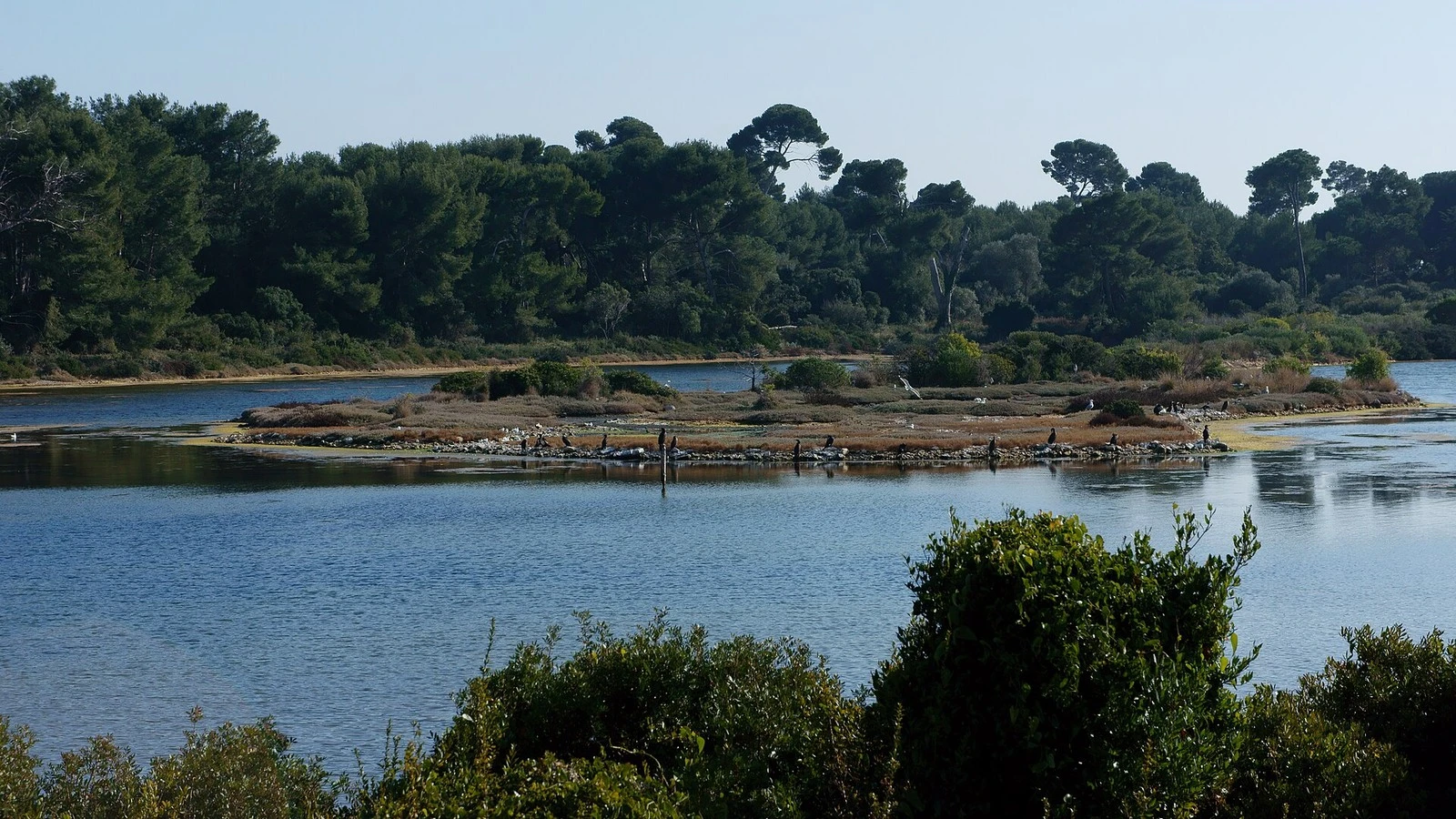
Classified as a managed biological reserve since 2006, the forest is crossed by more than twenty kilometers of paths, including the Allée des Eucalyptus, planted in the 19th century, while the Chemin de Ceinture loops around the island in eight kilometers. The island counts 133 bird species, and the saltwater Batéguier pond, to the west, draws migrating birds that observation hides let you watch up close; common terns have returned to nest on its islet after work carried out by the French National Forests Office (ONF). The forest is also home to a more discreet resident, a fungus discovered on the island’s wood in 2007 and named after it, Phlebia margaritae. The “Cannes Lérins & moi” app, from the ONF and the town, guides a one-hour walk around the pond.
The underwater statues lie off the Maison Forestière
The shoreline alternates between rocks and small pebble beaches, where water shoes come in handy. Sainte-Anne beach is the first one on the left of the landing stage, and the Allée du Dragon leads west to the Dragon coves, shaded by pines. On the south shore, the beach of the Maison Forestière (the forest house) is the largest on the island and slopes gently, so young children can wade in little by little.
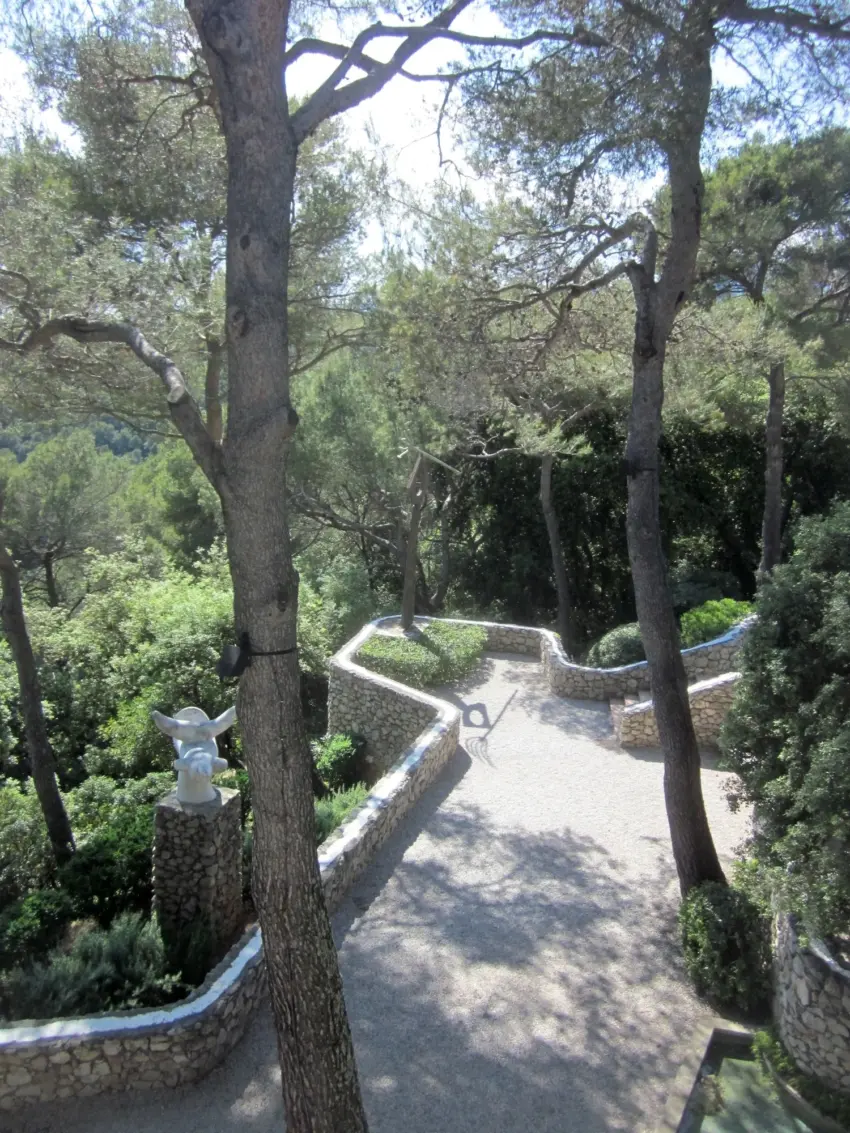
It is just off the path to the Maison Forestière, 84 to 132 meters from the shore and three to five meters deep, that the six statues of the underwater eco-museum by British artist Jason deCaires Taylor have rested since 2021. About two meters tall, they reproduce the faces of Cannes residents who volunteered, and you can see them with a mask and snorkel, as long as you do not touch them: the algae growing over them are gradually turning them into a shelter for marine life. The landing stage is a twenty-minute walk away.
The island bans fire and has no trash cans
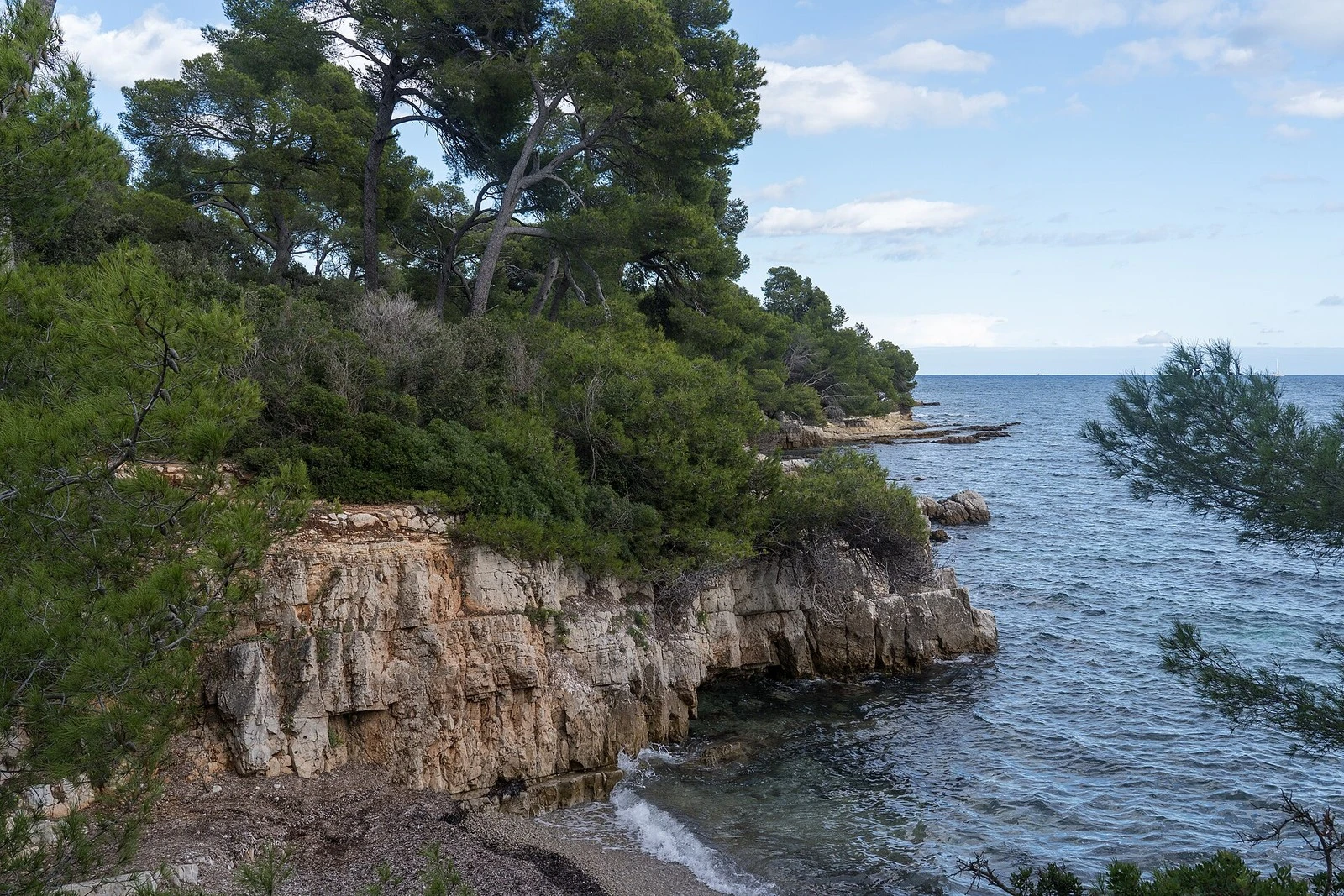
Covered in conifers and visited by three to five thousand people a day in summer, the island bans fire of any kind, cigarettes included, and picnics are eaten without a barbecue, at the tables scattered under the pines. The trash cans have been removed, so everyone takes their waste back to the mainland. Dogs are welcome on a leash, but camping and nudity are prohibited, and drones, bikes and scooters stay on the dock. Two kiosks near the landing stage sell sandwiches and ice cream.
Three companies link Cannes to the island in fifteen minutes
Trans Côte d’Azur, Riviera Lines and Horizon run the crossing every day of the year from the Old Port, Quai Laubeuf. No shuttle runs directly between Sainte-Marguerite and Saint-Honorat, the neighboring island of the Lérins monks: you have to go back through Cannes. A round trip costs €19 for an adult, €13.50 for ages 5 to 12, and €17.50 for ages 13 to 25 or over 65; it is free for toddlers. Boats leave roughly every hour from 9 am, and as early as 7:30 am with Trans Côte d’Azur and Riviera Lines, except on Sundays from November to March. The last return boat leaves the island at 5 pm with Horizon and Riviera Lines, while Trans Côte d’Azur lists returns until 6:30 pm. If you miss the last boat, Taxi de Mer (+33 6 11 50 77 53, March to late October) will bring you back, at a higher price.
Practical information
Parking: the Laubeuf parking lot is closed; the nearest are the Pantiero, Suquet-Forville and Palais des Festivals lots.
Musée du Masque de Fer et du Fort Royal: October to March, Tuesday through Sunday, 10:30 am to 4:45 pm, closed 1:15 pm to 2:15 pm; in April and May, until 5:45 pm; June to September, daily, 10 am to 5:45 pm. Last admission thirty minutes before closing. Admission €6.50, €3.50 for ages 18 to 25, free for under-18s, students, and for everyone on the first Sunday of the month from November to March; on Mondays from October to May, only the fort is open, for €3.50. Pets, strollers and beach gear are not allowed. Phone +33 4 89 82 26 26.
Staying on the island: Sainte-Marguerite has no hotel. Its only accommodation, the Centre International de Séjour, which Cannes Jeunesse runs in the fort’s barracks, offers about 240 beds in dormitories, mainly for groups but also for families and individual travelers, especially on weekends, from March 2 to November 1, 2026 (+33 4 97 06 27 20).
Opening hours and prices as of October 2026; check before you go.
Where to stay: the Villa du Roc Fleuri welcomes guests less than twenty minutes on foot from the island ferries
980 meters from the Palais des Festivals, the Villa du Roc Fleuri has five rooms and suites that Fanny and Max furnished largely with their own hands, down to the lamps made in Fanny’s workshop. In the morning, Fanny serves a homemade breakfast on the terrace or under the glass roof, where in the evening the table d’hôtes gathers guests around dishes from Nice and Provence. Quai Laubeuf is only 1.3 km from the house, so you can catch the first boat to Sainte-Marguerite on foot, without hunting for a parking space near a port whose parking lot is closed.

More places to discover on the French Riviera